There's no single winner — it depends on your current plan. Roam if your carrier already covers your destination at a clear, fair price (and you need calls and texts on your usual number). Choose a travel eSIM if you mainly need data and want to know the cost before you go — especially when roaming is pricey, confusing, or not included.
Before a trip abroad there's usually one thing to sort out: do you just use roaming on your normal plan, or buy a travel eSIM for the trip? Both work. Roaming uses your regular SIM and carrier, so it feels simple. A travel eSIM is a separate data plan for the country you're visiting. Which is better comes down to cost, simplicity, and control.
What is roaming?
Roaming means using your normal plan outside your home country. You land, your phone connects to a local network through your usual carrier, and you carry on — same SIM, same number, often nothing to install. The catch is price: it depends entirely on your carrier. Some plans include roaming in certain countries; others charge a daily fee or cap your data. Roaming isn't bad — it's only a good idea when you know the price and the rules before you leave.
What is a travel eSIM?
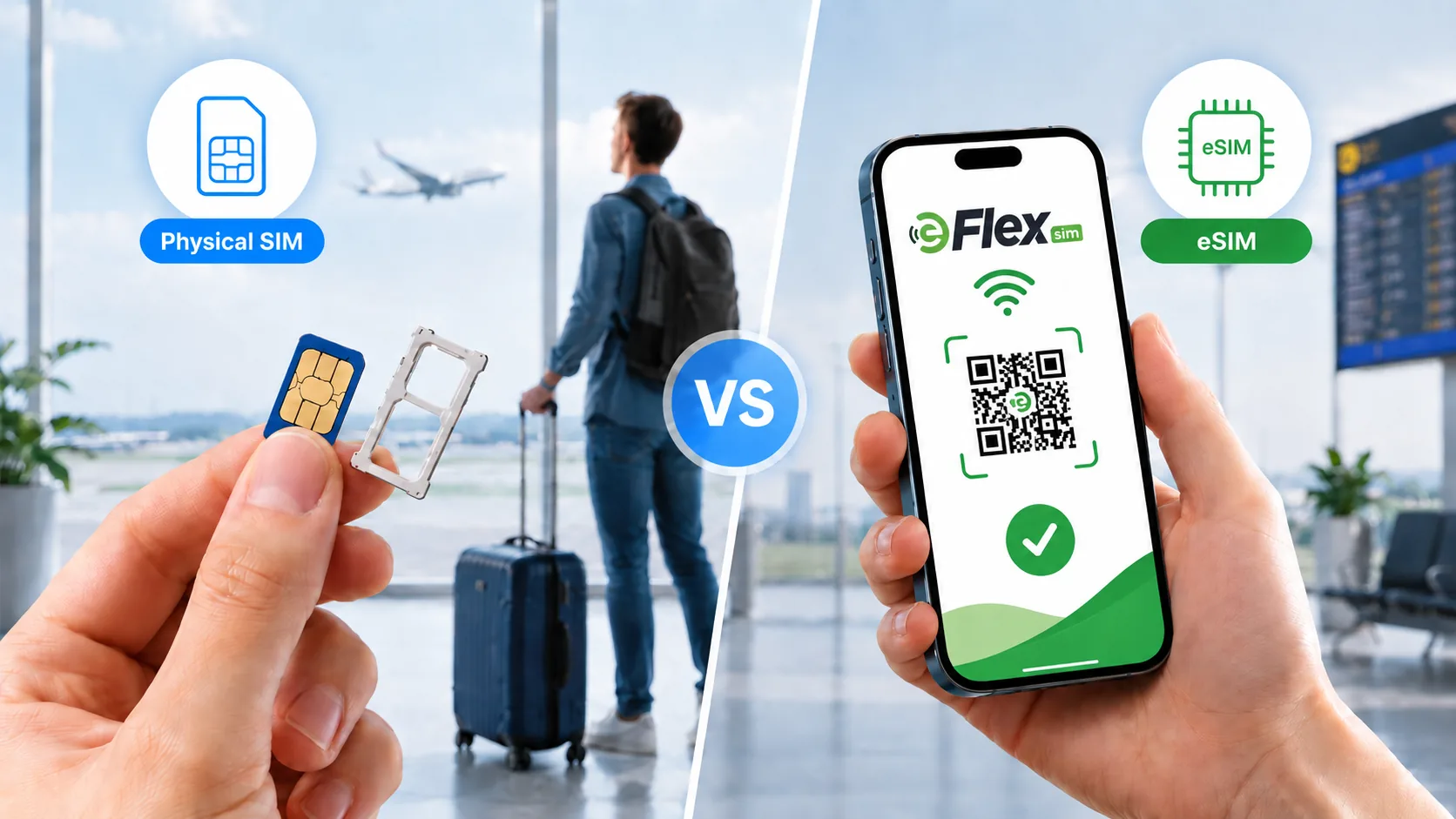
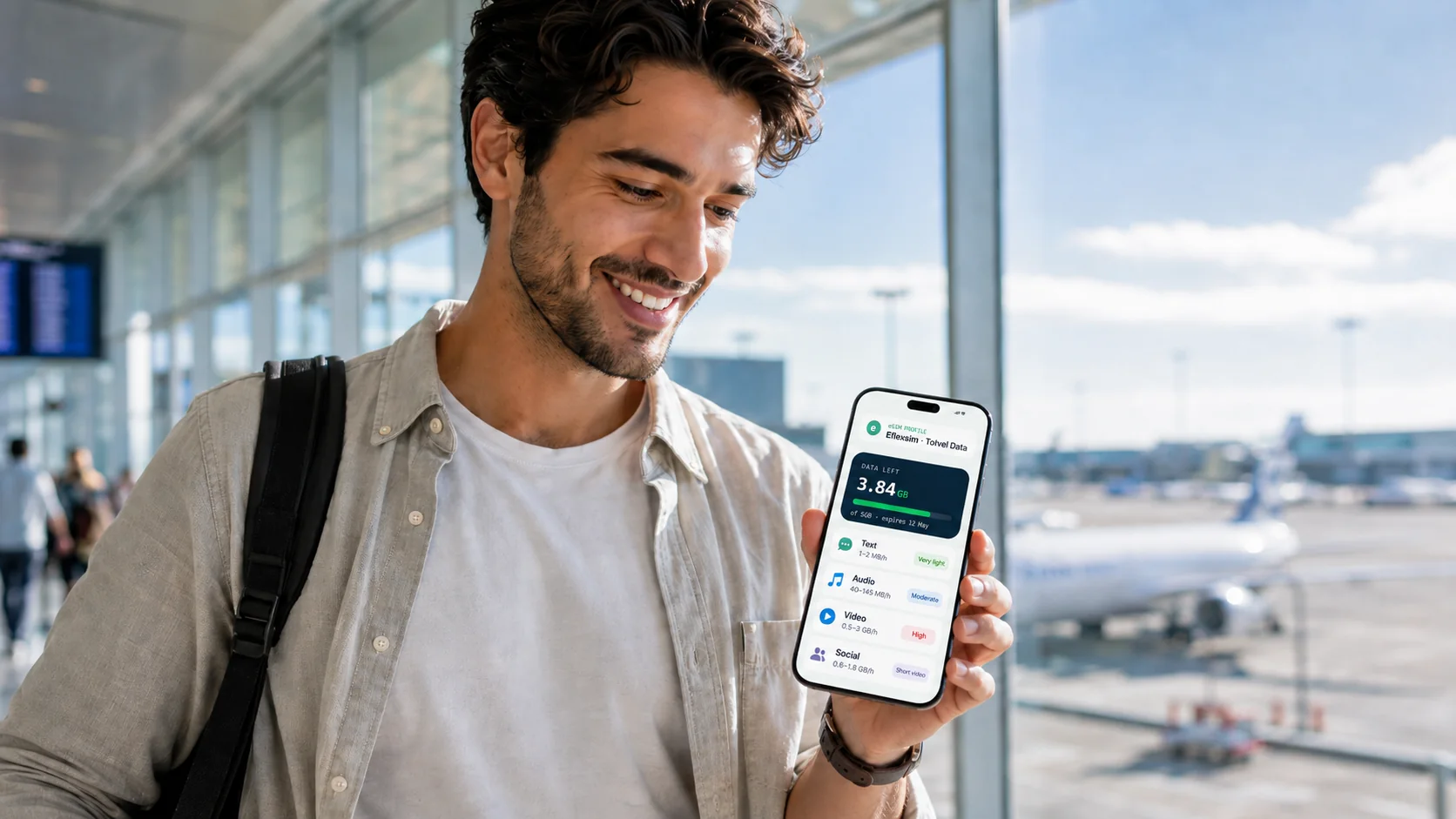
A travel eSIM is a digital data plan you install on a compatible phone — no plastic card. You pick a destination, buy a plan, scan a QR code, and it handles your data abroad. Most are mainly for data (maps, messaging, bookings, transport, translation), so if you need normal calls or texts, check the plan first. Many travelers keep their normal SIM on for their usual number and let the eSIM do the data. One catch: your phone has to support eSIM and usually be unlocked. (New to how it all works? Start with how eSIMs work.)
The main difference: control
Roaming uses your home plan abroad; a travel eSIM is a separate data plan just for the trip. With roaming, the price follows your carrier's rules. With an eSIM, you pick the data, destination, length, and price before you go. Roaming is often easier to start — it can just kick in. An eSIM takes a few minutes to set up, but it's easier to plan, because you know what you bought before you leave.
Cost: which is easier to control?
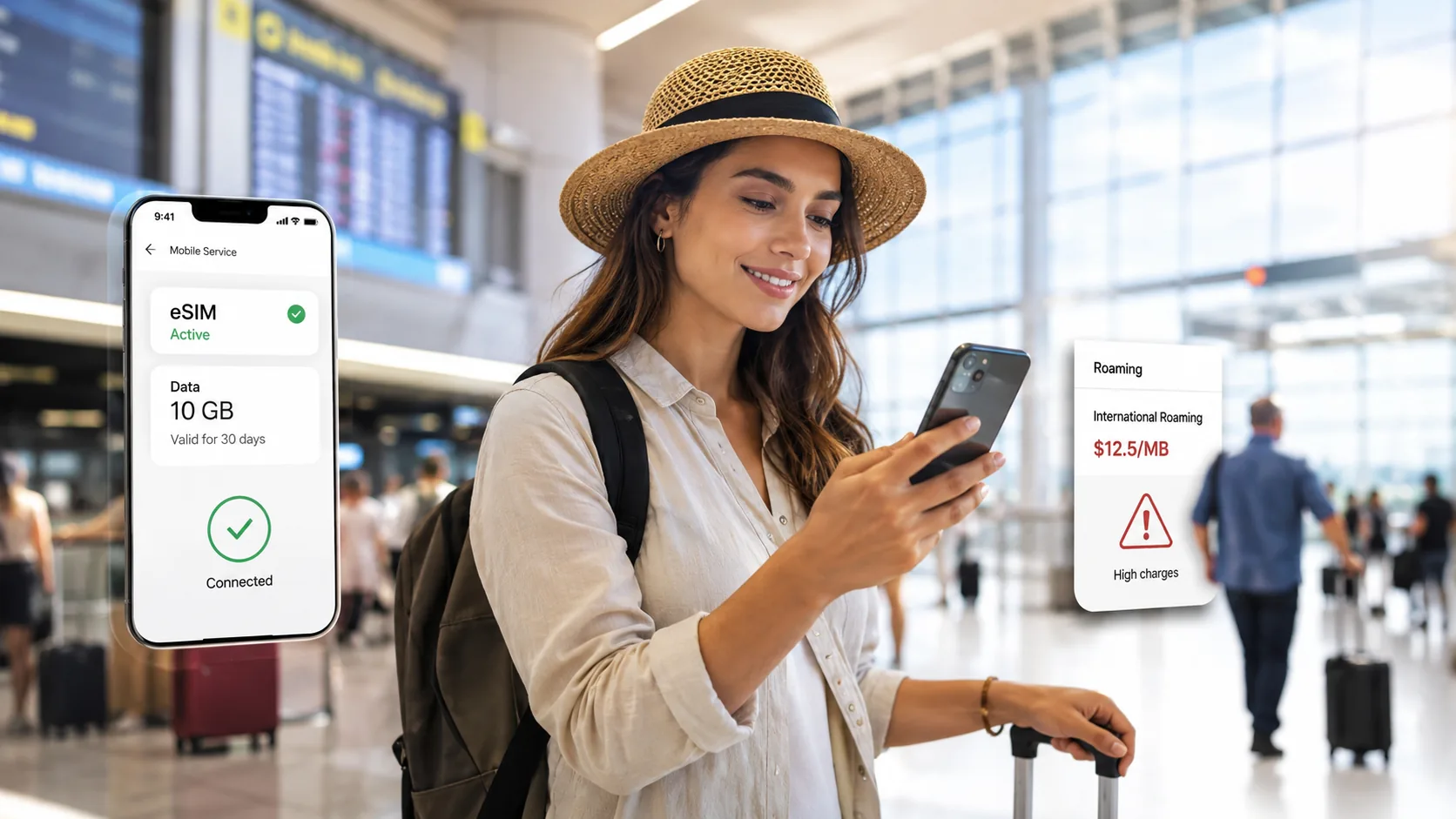
Roaming can be cheap if your plan already covers where you're going. It gets expensive when your destination isn't included, your carrier charges a daily fee, or your data is capped — and the usual problem is people don't check the small print until the bill lands. An eSIM flips that around: you choose the plan first and see the price, data, and validity up front. That doesn't always make it cheaper — it depends on the destination — but the cost is clearer.
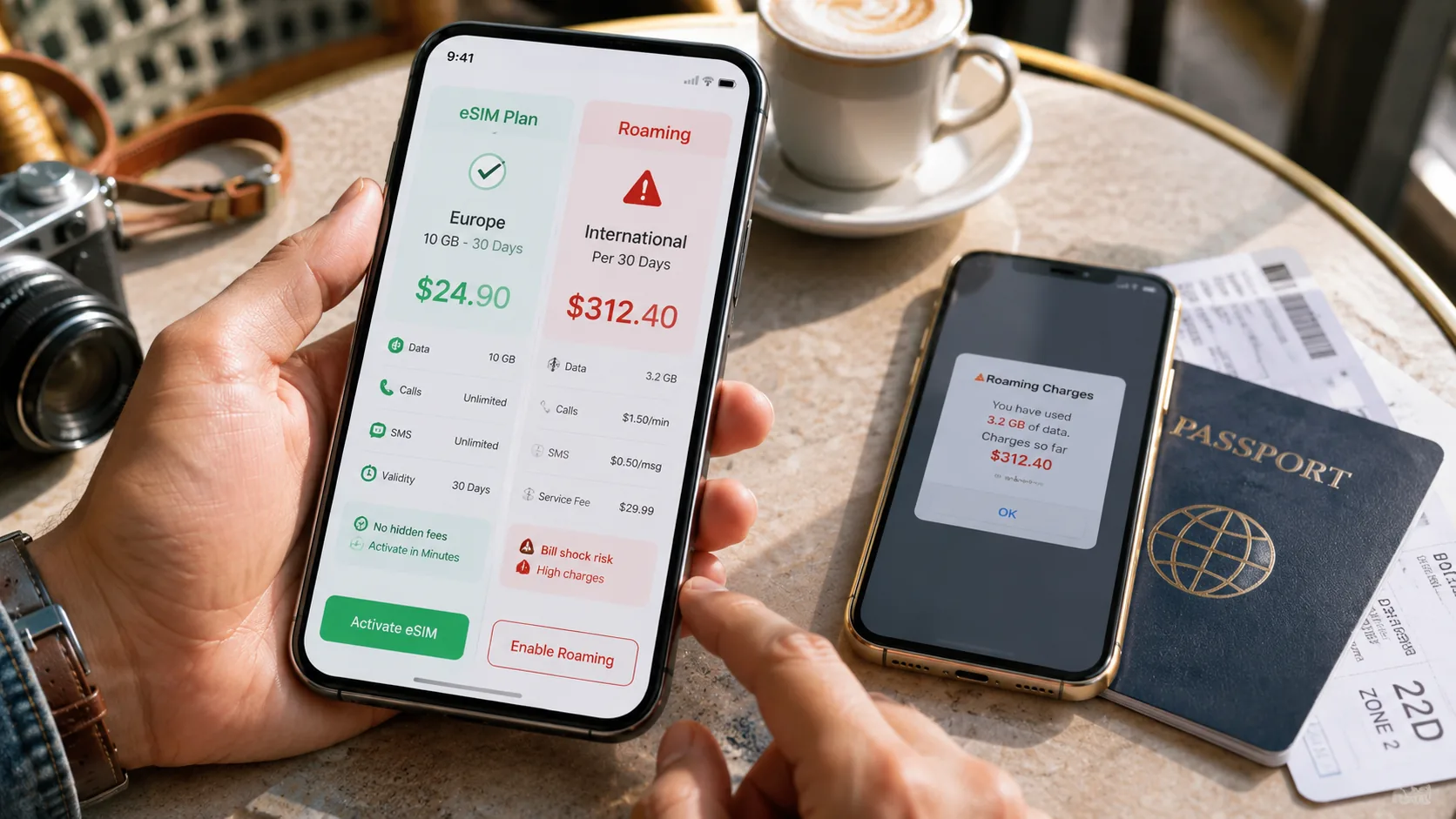
Quick comparison
When roaming makes sense
Roaming can be the right pick when your plan already covers your destination with enough data, for a really short trip with a clear deal, or when you need normal calls and texts on your usual number (many eSIM plans are data-only). The one rule: check the price and conditions before you travel. Roaming is only risky when the rules are unclear.
When a travel eSIM makes more sense
An eSIM usually wins when you mainly need data and want to know the cost before leaving — especially if your destination isn't in your plan or your carrier's roaming is pricey or confusing. It suits data-heavy trips: city breaks, business travel, family holidays, and multi-country routes that run on maps, messages, bookings, and transport apps.

Families
For families the cost multiplies fast — one roaming line is fine, several is another story. An eSIM lets you size each person's data (a bigger plan for some, a small one for others, none for the kids who'll be on Wi-Fi), which is easier to plan than letting every phone roam on autopilot.
Business travelers
Business travelers need data the moment they land. Roaming works if the company has an international plan, but for freelancers and small business owners it's harder to keep a lid on. An eSIM gives a clear cost up front, which also makes the expense easier to file later.
Longer trips and multiple countries
On longer trips, daily roaming fees or capped data add up the longer you're away. For multi-country routes, one country might be included and the next not — hard to predict. An eSIM can cover one country, a region like a single Europe eSIM, or several destinations. Just check the covered countries, data, and validity before you buy.
How to choose
Start with your current plan: is your destination covered, and is the data enough? If roaming is included at a fair price, that might be all you need. If not, or the cost is murky, compare it with an eSIM. Then think about how much data you'll use, and check your phone supports eSIM and is unlocked. Simple rule of thumb: roam if it's already included and predictable; go eSIM if you want clearer data costs before you leave.
So, which is better?
There's no single answer. Roaming is good when your plan already covers your destination at a clear price, and when you need calls and texts on your usual number. An eSIM is usually better when you mainly need data and want to know the cost before you travel. With eFlexsim, you can choose a travel eSIM plan for your destination, set it up before the trip, and use data abroad without relying only on your carrier's roaming.