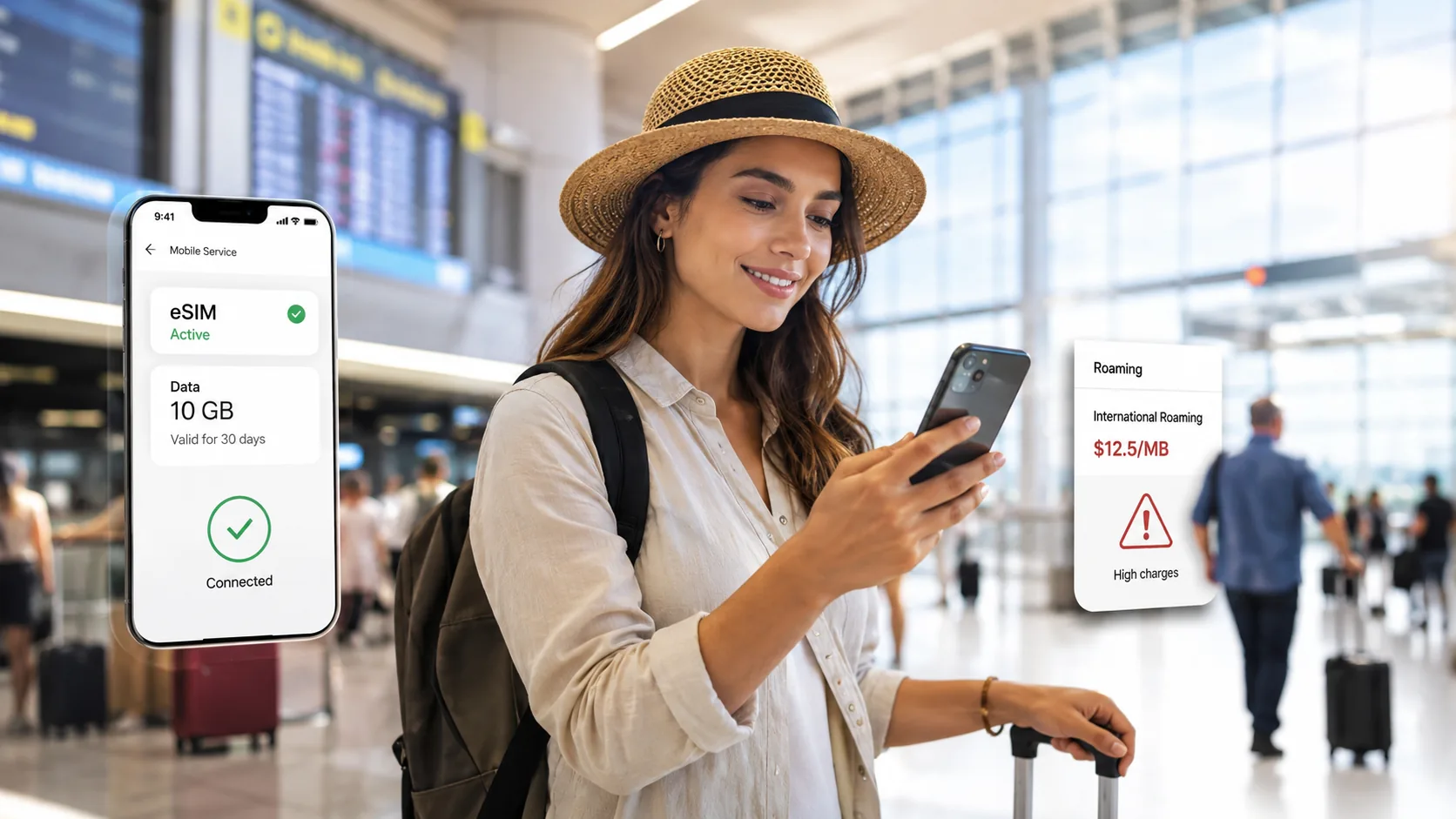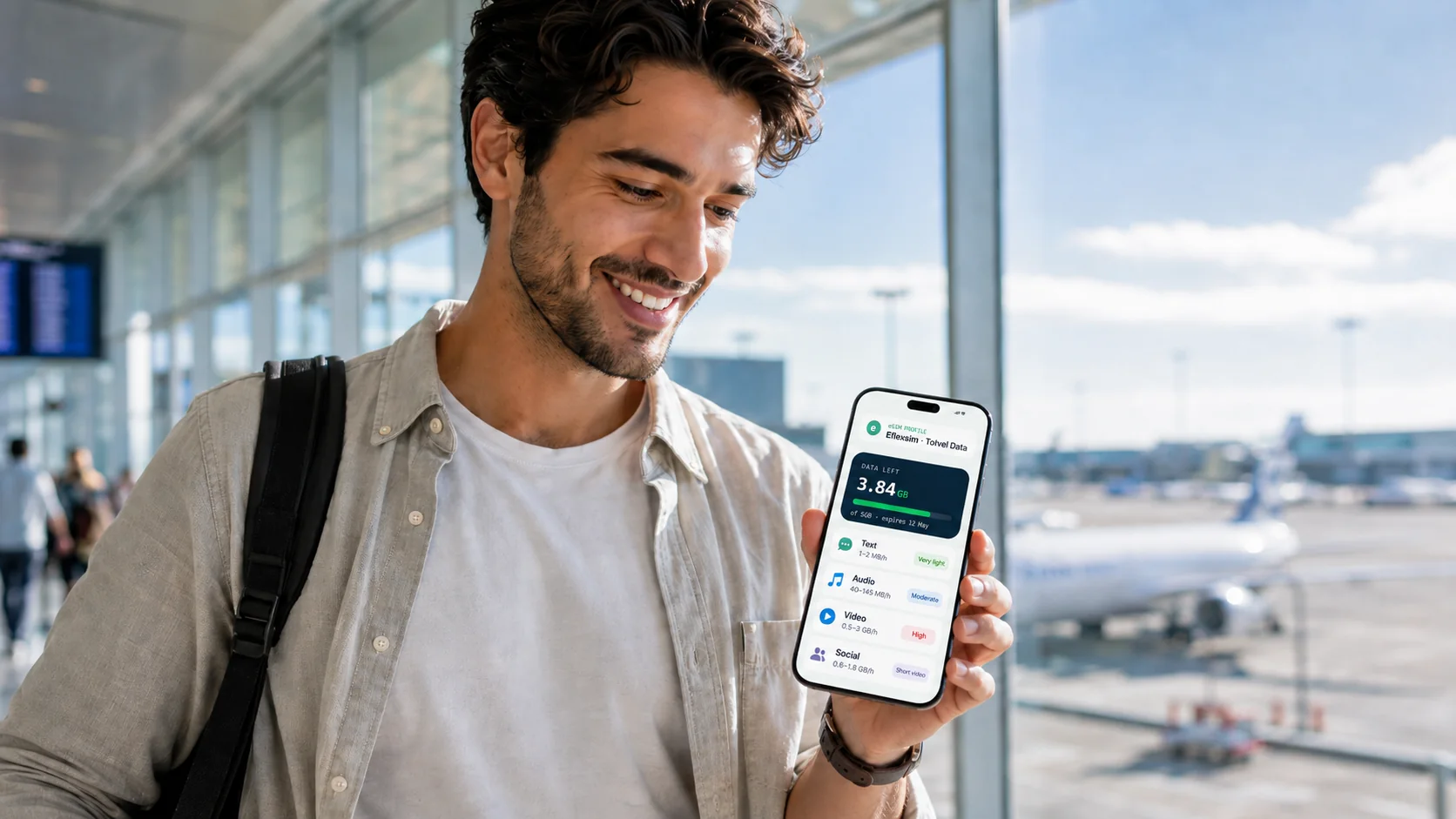
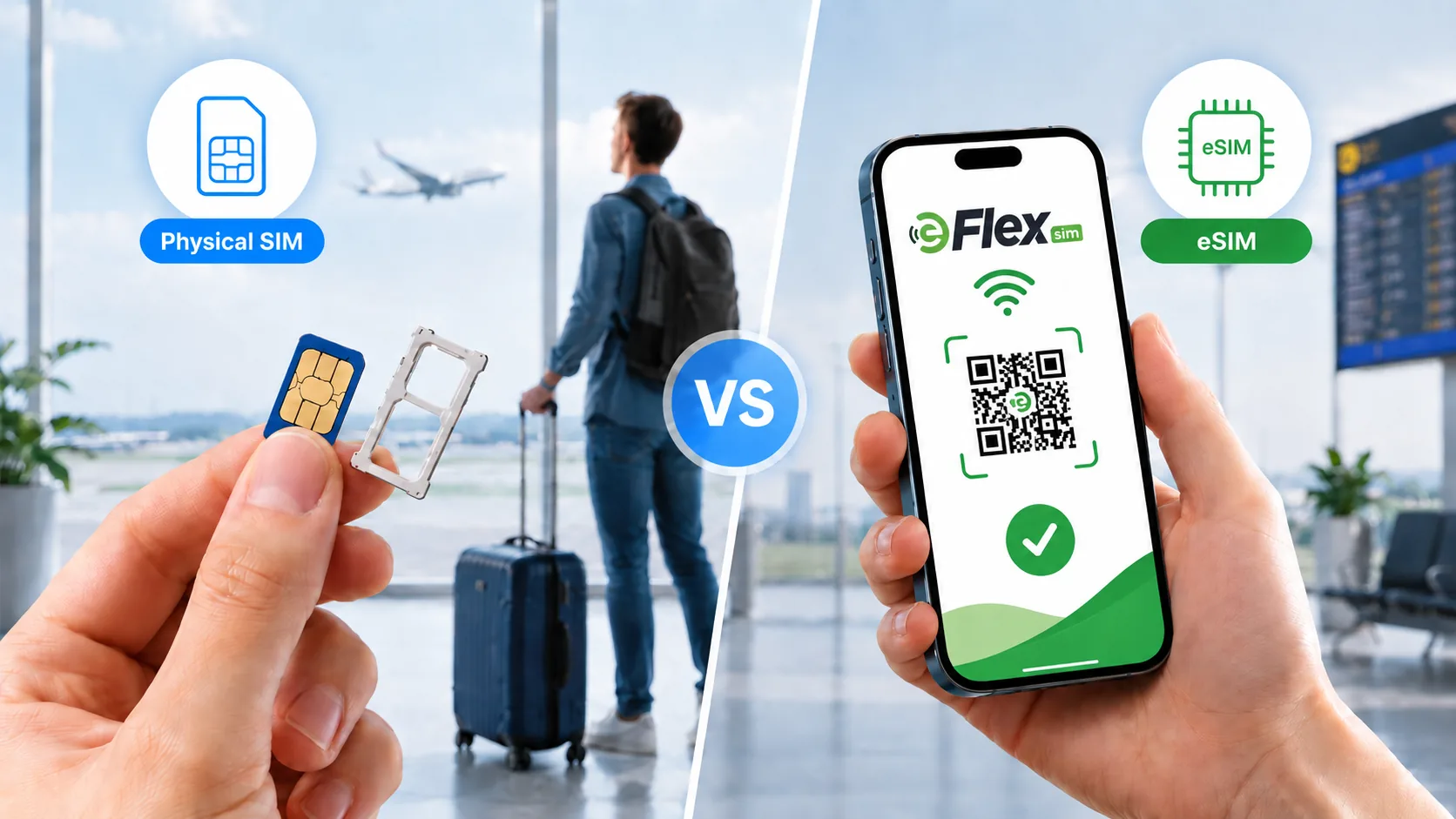
Short answer: if your phone supports eSIM and you mainly need data abroad, an eSIM is usually the better choice — it installs in minutes, lets you keep your main number active, and travels easily across countries. A physical SIM still wins on older phones, or when you need a local number for calls and SMS.
For a long time, the physical SIM card was the normal way to connect a phone to a mobile network. But travel has changed. More people now want to set up their connection before a trip, keep their main number active, and avoid carrying tiny plastic cards from one country to another.
An eSIM doesn't replace the idea of a SIM — it replaces the plastic card. Instead of inserting a chip, you install a digital mobile plan on a compatible device. For travelers, that can make the whole experience smoother, especially when the goal is simply mobile data abroad. This guide compares the two from a practical point of view, so you can decide which fits your phone and your trip.
What's the real difference between eSIM and physical SIM?
The real difference isn't the network. Both can connect your phone to a mobile network. The difference is how the plan is stored.
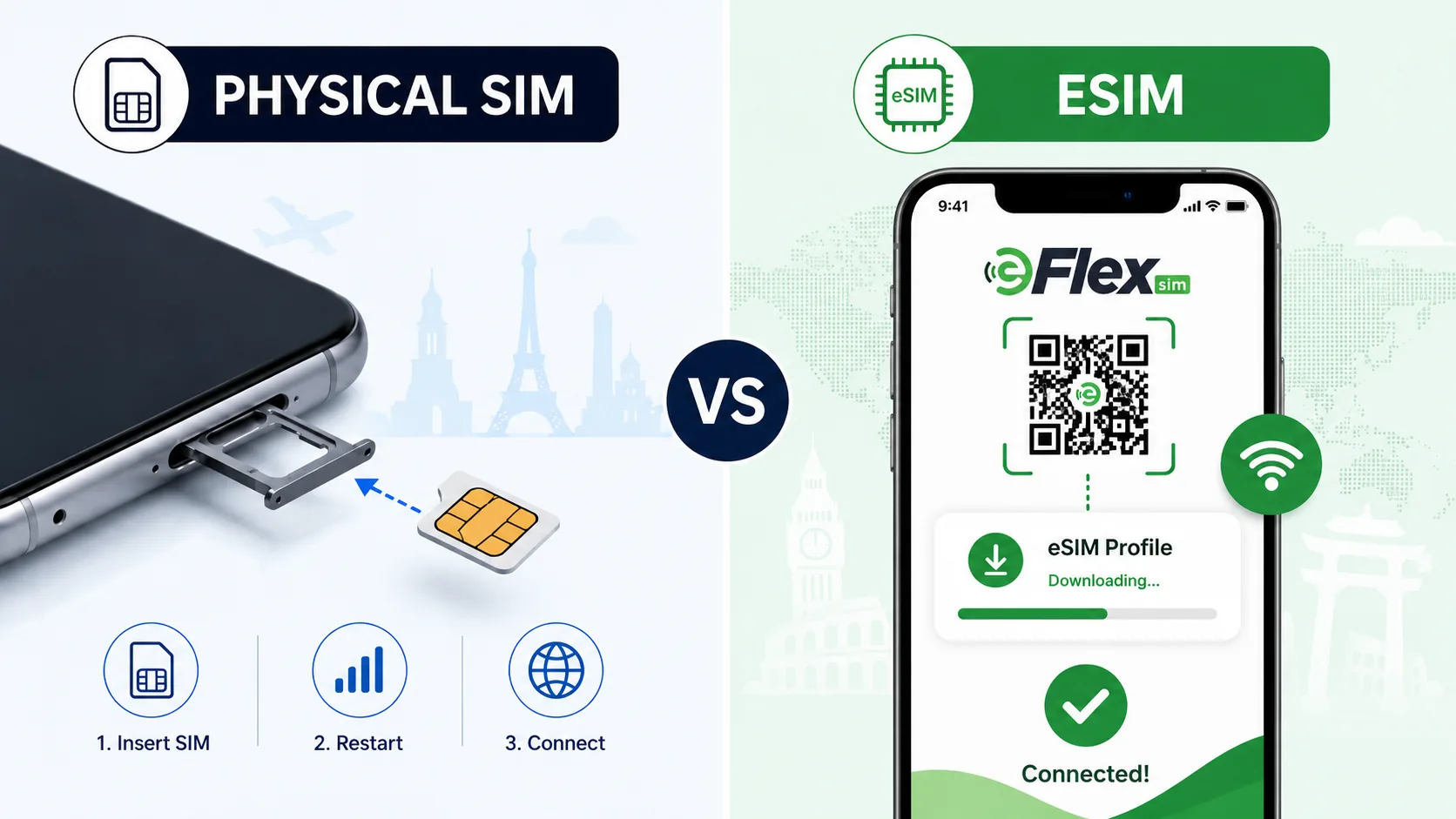
A physical SIM card is a removable chip — you can take it out, replace it, lose it, damage it, or move it to another phone. An eSIM is built into the device, and the plan is added digitally, usually with a QR code or a one-tap install.
So the question isn't only which one works — both can. The better question is: do you want a plan that depends on a removable card, or a digital setup inside your phone? For everyday use the difference feels small. For travel, it can matter a lot.
The physical SIM card: familiar, but less flexible
A physical SIM is easy to understand. You can see it, hold it, remove it, and replace it — which is why many people still trust it. If your phone is unlocked, you can usually buy a local SIM, insert it, and use a local plan. That's handy when you need a local number, calls, or SMS during a longer stay.
But physical SIMs come with practical limits. You need the card itself, often a SIM-ejector tool, and somewhere safe to keep your original SIM. Travel through several destinations and you may end up juggling several small cards. It still works — it's just less flexible when you move often.
The eSIM: a digital SIM for a more flexible setup
An eSIM removes the plastic part of the experience. Instead of swapping a card, you add a plan digitally. On a compatible phone you can keep your main SIM in place and use a separate plan for travel data — one of the biggest advantages of a travel eSIM.
No opening the SIM tray. No storing your home SIM in your wallet. No worrying about losing a tiny card between hotels, airports, and trains. For people who travel often, that small difference saves a lot of friction.
eSIM vs physical SIM: a practical comparison
The simplest way to compare both:
The best choice depends on the device first, then the trip. If your phone isn't eSIM-compatible, it's simple — use a physical SIM. If it supports eSIM, the digital option is usually more comfortable for short trips, frequent travel, and travel data.
Why eSIM is often easier for travel
The advantage of an eSIM isn't that it sounds modern — it's that it removes small problems. Travel with a physical SIM and you may have to pull out your usual card, which is a pain if your regular number still matters for bank codes, family messages, work contacts, or account security.
With an eSIM, many phones let you keep your physical SIM active while the eSIM handles data. Your regular number stays available, and your travel data runs separately — a cleaner setup, with nothing to physically swap.
Device compatibility comes first
Before choosing an eSIM, check your phone. Not every phone supports it, and even a familiar model can differ depending on the country it was sold in. You should also check that your phone is unlocked — a phone locked to one operator may refuse another plan even if it supports eSIM.
So before buying any travel plan, confirm two things: does your phone support eSIM, and is it unlocked? The quickest way is to check whether your phone is eSIM compatible. If both are yes, an eSIM becomes a strong option.
Dual SIM: the big advantage for many travelers
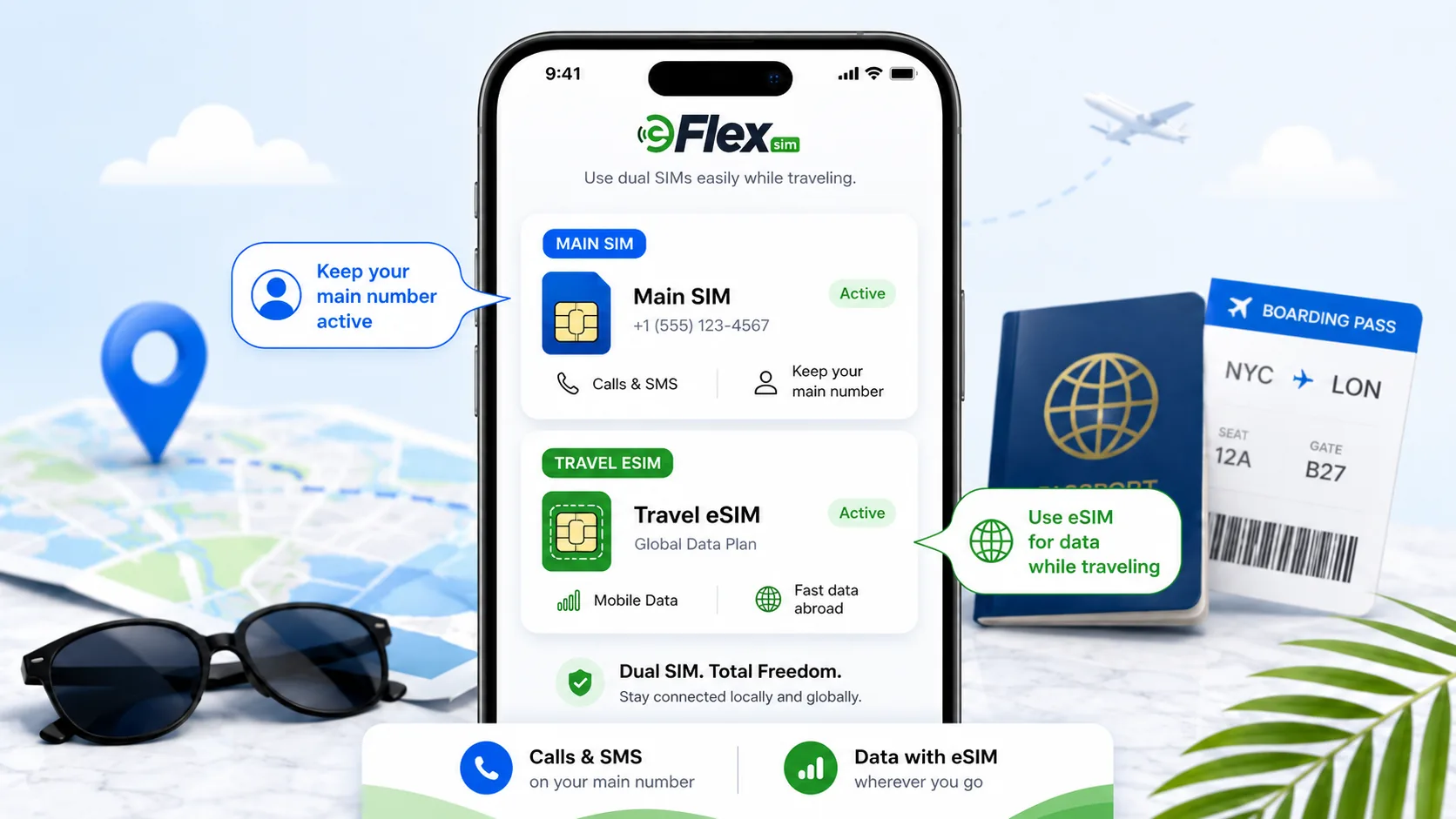
Dual SIM is one of the most useful reasons to choose eSIM. Many modern phones run two lines at once — often one physical SIM plus one eSIM. Your normal SIM stays connected for your regular number; your eSIM handles data abroad.
That means you don't have to choose between staying reachable on your usual number and using a separate travel plan. It's especially useful for business travelers, families, and anyone who relies on verification codes and doesn't want to remove their main SIM mid-trip.
Security and switching phones
A physical SIM can be removed from your phone — useful for switching devices, but a small risk if the phone is lost or stolen. An eSIM can't be popped out the same way; the profile is digital and tied to the device. That doesn't make a phone automatically secure (you still need a strong passcode and account protection), but there's no small card to lose or leave behind.
Switching phones is the one area where physical SIMs can feel simpler — you just move the card to another unlocked phone. With an eSIM, moving the plan depends on the provider and the phone, and some profiles can't be reused once deleted. So don't delete an eSIM too early: if you're still traveling, keep it installed until the trip is over.
Which is better for your trip?
Short trips. If your phone supports eSIM, it's usually the easier choice. You mainly need data for maps, messaging, transport apps, and browsing — keep your normal SIM in place and use the eSIM for the trip.
Long stays. Less automatic. For several months in one country, a local physical SIM may be worth comparing for a local number, calls, SMS, and monthly plans. An eSIM is still useful on arrival when you need data immediately.
Multi-country travel. An eSIM is usually more practical. Instead of buying and swapping cards at each border, you can pick a country or regional plan for your route — for example a single Europe eSIM across the whole trip. Fewer things to manage on the road.
eSIM vs physical SIM, at a glance
eSIM is great when your phone is compatible and unlocked, you mainly need travel data, you want to keep your main number active, you travel often, or you visit several countries.
A physical SIM still wins when your phone doesn't support eSIM, you need a local number with calls and SMS, or you're settling in one country for the long term. (Note: many travel eSIM plans are data-only.)
So, which should you choose?
There's no single answer for everyone. Choose an eSIM if your phone supports it and you mainly need mobile data while traveling — it's the simpler setup, keeps your main SIM in place, and travels well across countries. Choose a physical SIM if your phone doesn't support eSIM, you need a local number, or you're staying somewhere long term.
For most modern travelers with a compatible phone, an eSIM is the more convenient choice. Before you decide, check your phone's compatibility, confirm it's unlocked, and be honest about what you actually need on the trip: data only, or a full local line. When you're ready, you can browse travel eSIM plans and be connected the moment you land.